
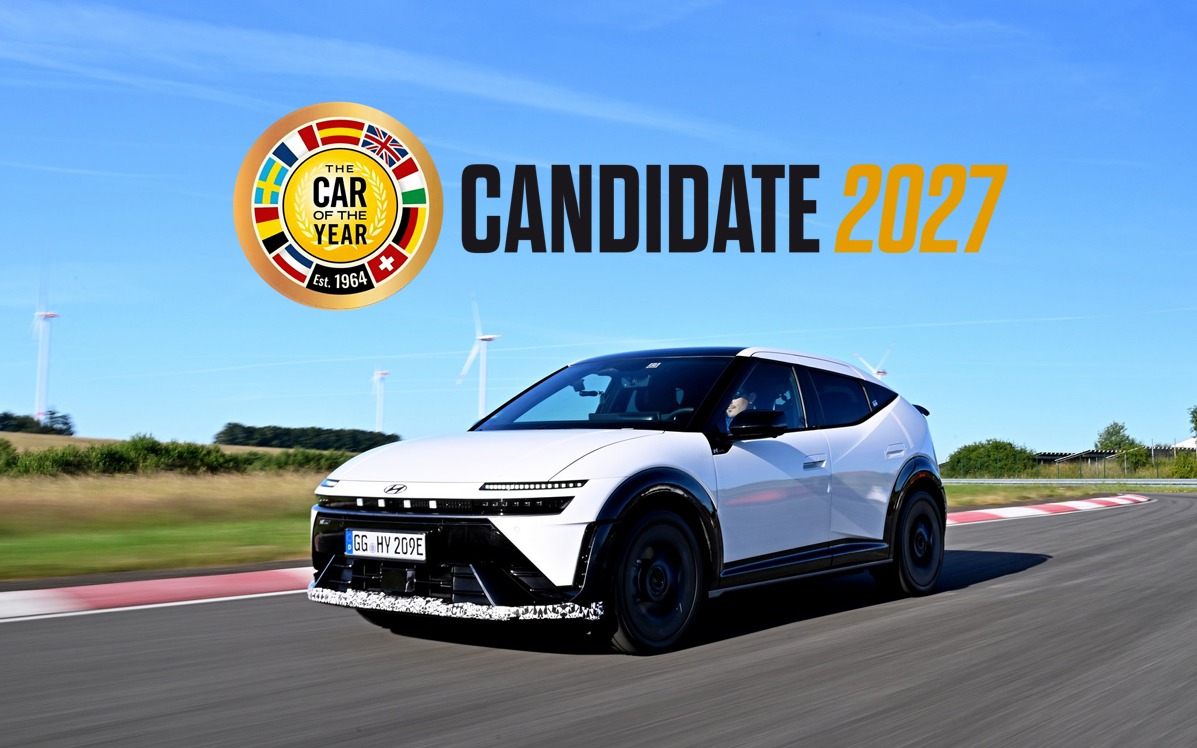
We had the opportunity to sample Hyundai’s new all-electric small car, the Ioniq 3, ahead of its official launch. It proves—rather than merely promises—that a compact exterior does not have to come at the expense of interior space.
By Miklós Gajdán (Hungary / Automagazin)
It is widely assumed that the capabilities of small cars are inherently limited, which is why many buyers move up one or even two vehicle classes as soon as circumstances allow. Yet there are always a few contenders in the segment that prove far more capable than their compact dimensions would suggest. Hyundai’s latest all-electric city car is a perfect example. We were among the first to experience it during an exclusive preview on a closed test track, where the prototype still wore light camouflage.
Judging by its exterior dimensions, theIoniq 3 is undeniably a small car. Measuring 4.16 metres in length, however, it sits at the upper end of the segment. It is, for example, longer than the previous benchmark, the Skoda Fabia, and matches the dimensions of the recently unveiled BYD Dolphin G DM-i. The new Hyundai and BYD models differ significantly in two key areas.
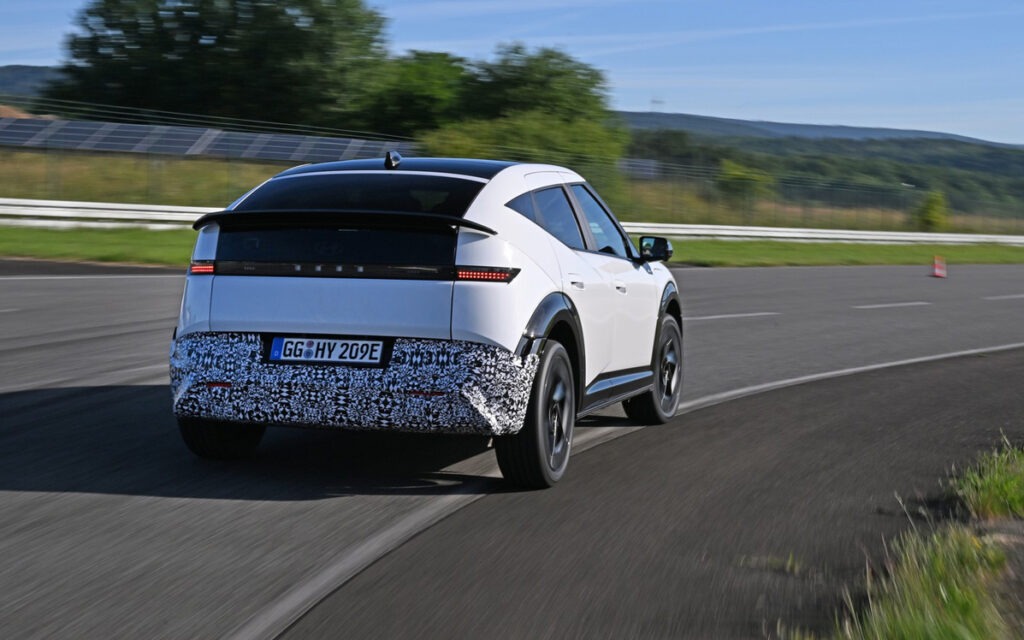
The first is the powertrain: while the Chinese rival relies on a plug-in hybrid system, the Ioniq 3 is powered exclusively by electricity. The second is overall height. At 1,575 meters, the Dolphin G is already approaching SUV territory, whereas Hyundai’s newcomer stands considerably lower at just 1,505 meters.
Tricks with space
A low roofline does not usually go hand in hand with generous interior space, yet the Ioniq 3 challenges that assumption with two key advantages. The first is its exceptionally long 2,680 meters wheelbase, one of the longest in its class. The second—closely related to the first—is its electric drivetrain, or more precisely, the compact packaging that an all-electric architecture makes possible. As is customary in EVs, the battery pack is housed beneath the floor, while the front-mounted assembly combining the electric motor, power electronics and reduction gear occupies remarkably little space.
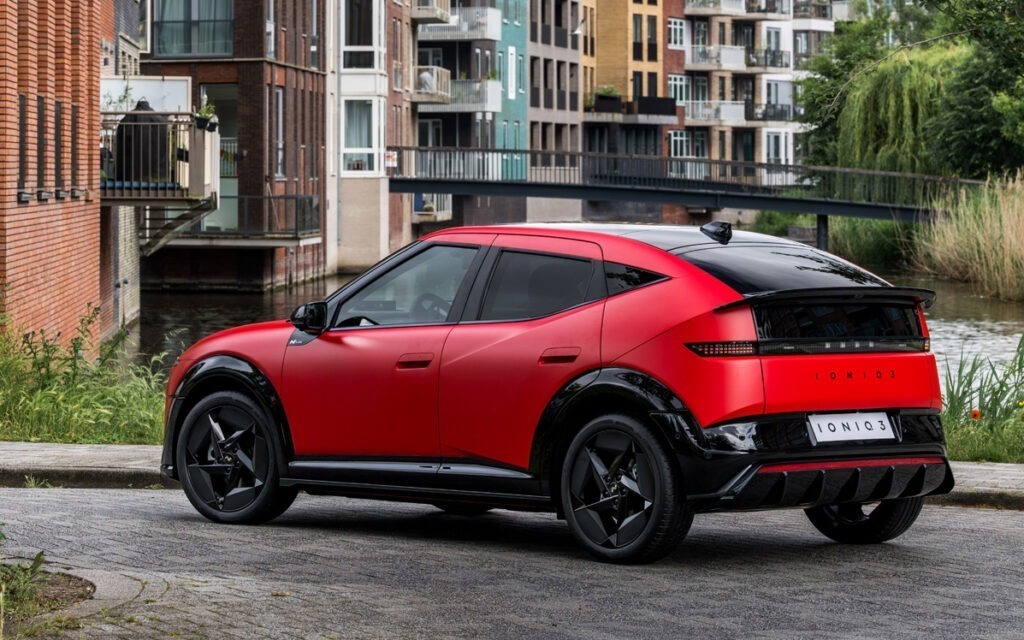
There is, however, another reason behind the unusually long wheelbase. Technically, the Ioniq 3 is closely related to Kia’s EV3, the brand’s 4.30-metre compact electric SUV. The two models share an identical wheelbase down to the last millimetre, and the larger of the two battery options offered in the Hyundai is also expected to be the very same unit used by its Kia sibling.
Whatever the explanation, the end result is an impressively spacious cabin. Four adults well above average height can travel in genuine comfort, while the rear bench is wide enough to accommodate three smaller passengers side by side when necessary. The luggage compartment is equally surprising. At first glance it appears rather modest, yet even in its standard configuration it offers 322 litres of cargo capacity.
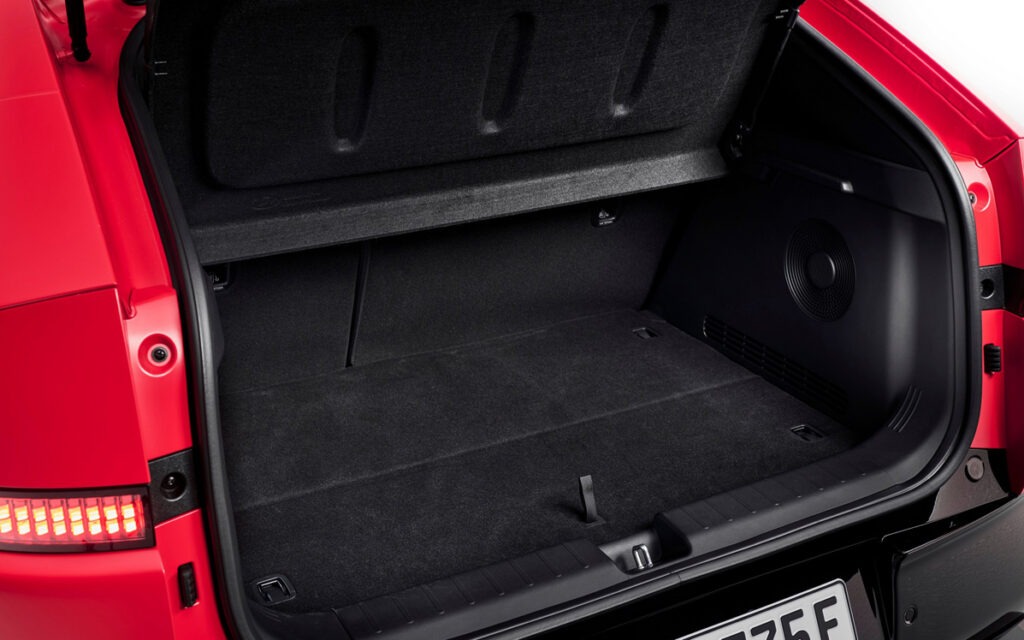
The real trick lies beneath the load floor, where an additional 119 litres of storage space are hidden. Removing the floor panel increases total capacity to 441 litres. Loading bulky items requires lifting them over the high sill before lowering them into the deeper compartment, but the available volume exceeds that of many vehicles from the class above. Leaving the floor in place has its own advantage: folding the rear seatbacks creates a completely flat load area.
Technology inside
The spacious interior is complemented by thoroughly modern technology. The digital instrument display is reduced to a slim strip at the top of the dashboard, allowing Hyundai to dispense with a separate head-up display altogether. The central touchscreen, meanwhile, can measure up to 37 cm (14.6 inches) diagonally, with a smaller 33 cm (13-inch) version also available.
The generous display area allows the most frequently used controls to remainpermanently visible along the bottom of the screen, while the upper section can be divided into as many as three separate information panels. The over-the-air updatable infotainment system made an excellent first impression, responding quickly and proving intuitive to use.
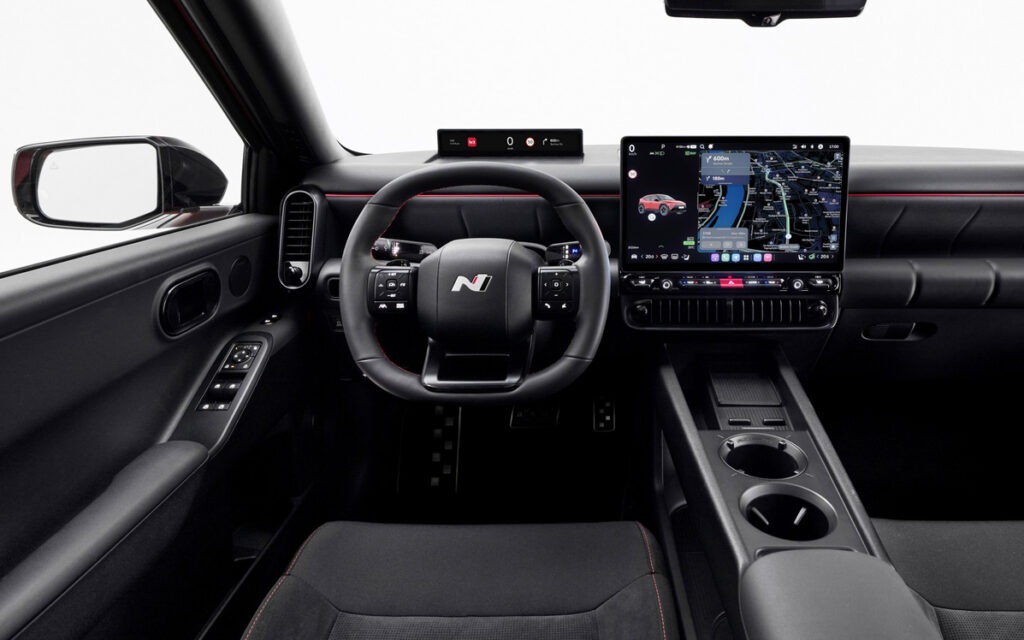
Hyundai has also wisely retained dedicated physical controls for the climate system beneath the display, while the multifunction steering wheel features proper buttons rather than touch-sensitive surfaces—another welcome decision.
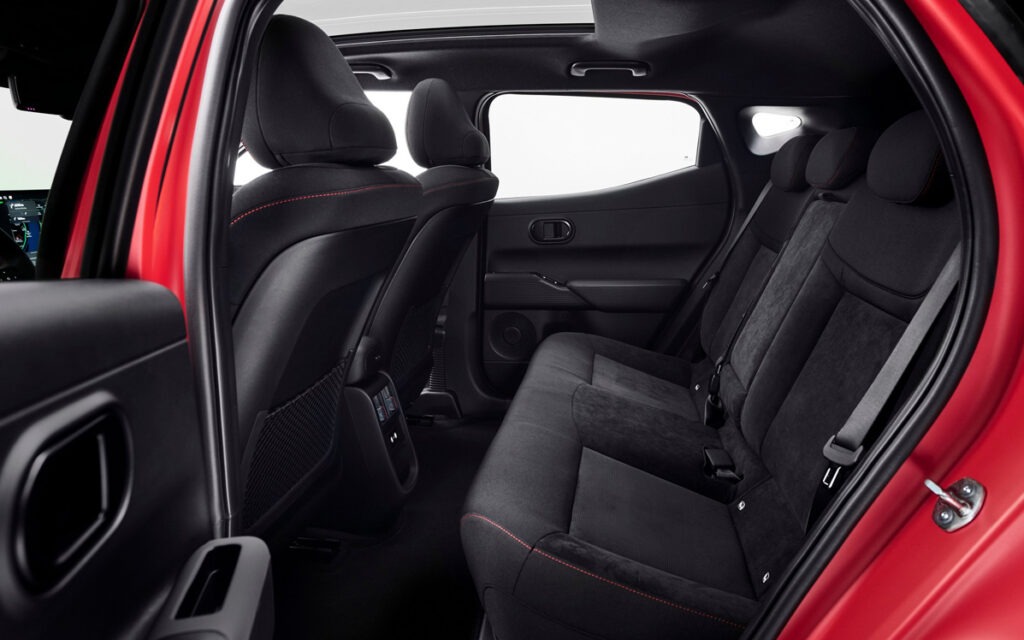
The cabin is equally user-friendly in terms of practicality, offering an abundance of storage solutions. The bridge-style centre console connecting the dashboard with the front armrest incorporates a small storage tray, a wireless smartphone charging pad and cupholders. Beneath it, Hyundai has created another generously sized storage compartment, large enough to accommodate everyday items such as a handbag.
Two powertrain options
Small cars—particularly electric ones—are often dismissed as little more than urban runabouts, suitable mainly for grocery shopping or short daily commutes. With the Ioniq 3, however, that stereotype only applies to one of the two available powertrains. The entry-level and more affordable Standard version is equipped with a 400-volt lithium iron phosphate (LFP) battery offering a usable capacity of 42.2 kWh. According to the WLTP cycle, it delivers a maximum driving range of up to 344 kilometres. Power comes from a permanent magnet synchronous motor producing 147 hp, enabling the Ioniq 3 to accelerate from 0 to 100 km/h in 9.0 seconds.
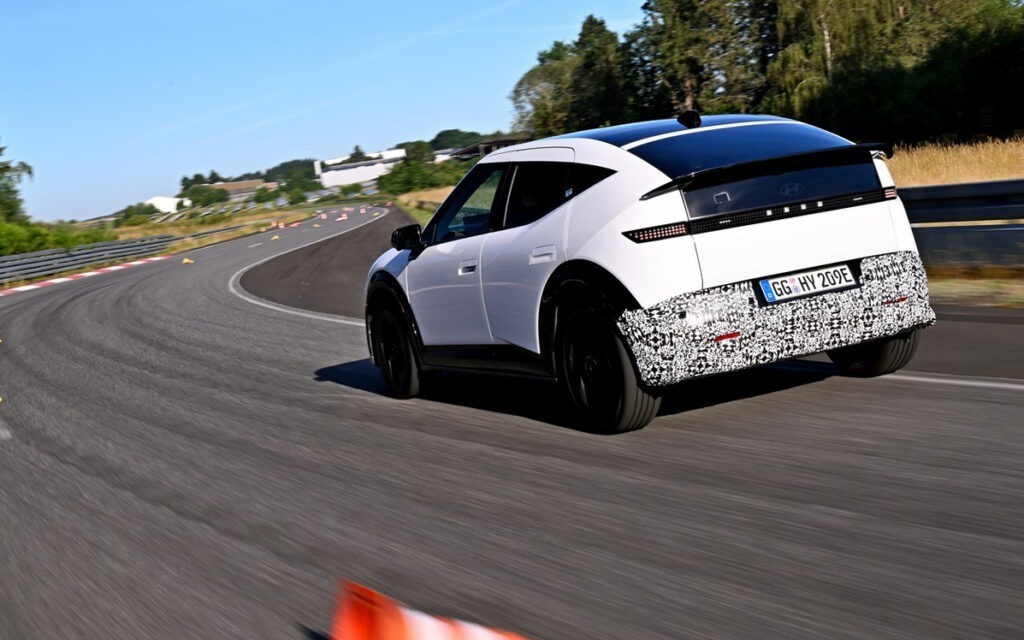
But this is where the story takes an unexpected turn. The second version, appropriately named Long Range, is also powered by a permanent magnet synchronous motor, yet its output drops to 135 hp. As a result, the 0–100 km/h sprint takes a slightly more leisurely 9.6 seconds. Top speed, however, remains unchanged at 170 km/h for both versions.
The reduced motor output of the Long Range model—despite its otherwise identical drivetrain—is clearly intended to maximise efficiency and extend driving range. The biggest contribution, however, comes from its significantly larger 61 kWh battery. Like the Standard model it operates on a 400-volt electrical architecture, butinstead of LFP chemistry it uses a lithium-ion nickel-manganese-cobalt (NMC) battery. Thanks to this combination, the Ioniq 3 is capable of covering almost 500 kilometres on a single charge.
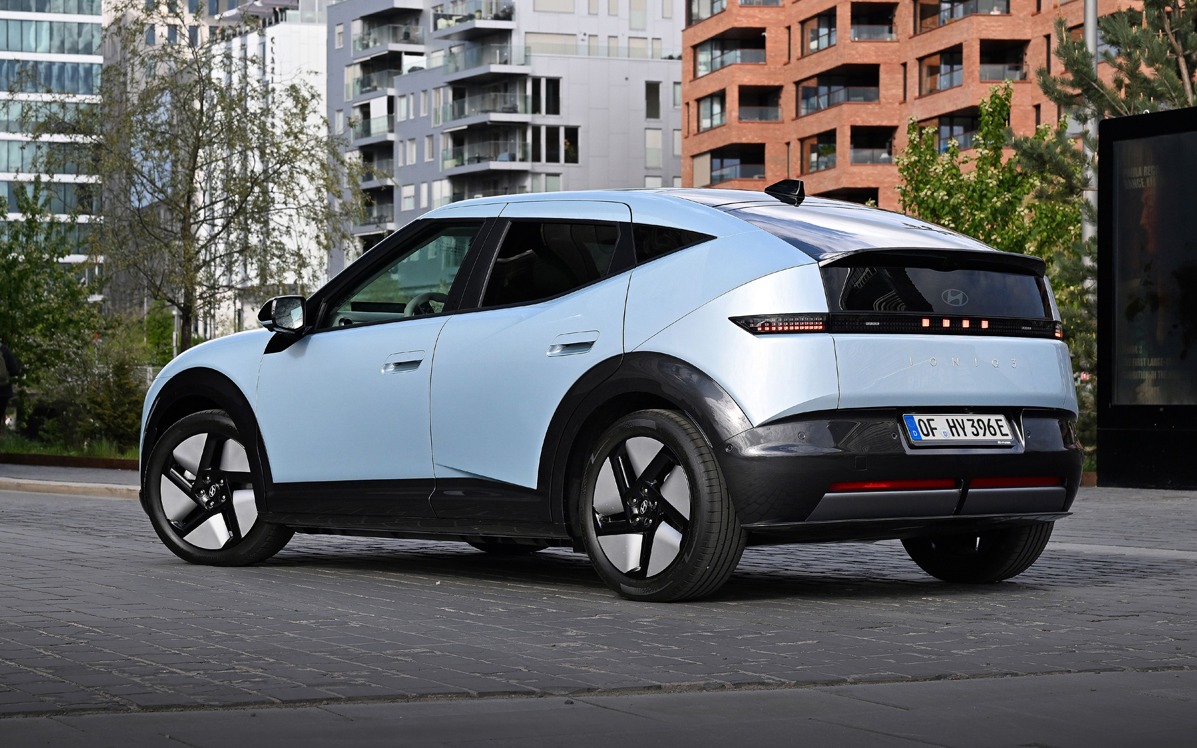
Perhaps even more impressive is the charging performance of the two battery packs. Replenishing the battery from 10 to 80 per cent takes virtually the same amount of time: 29 minutes for the Standard version and 30 minutes for the Long Range. The crucial difference lies in how much additional driving that charging session provides. In the Standard model, a 10–80 per cent recharge translates into roughly another 230 to 240 kilometres of driving, whereas the Long Range version can gain as much as around 350 kilometres over the same period. That makes the latter a far more convincing companion for longer journeys and allows drivers to set off for more distant destinations with considerably greater confidence.
Let’s drive!
Looked at from another perspective, the impressive driving range is also the result of outstanding efficiency. The Ioniq 3 benefits from an aerodynamic drag coefficient of just 0.263—an excellent figure for a car in this segment—as well as a relatively small frontal area. A good illustration of the importance of aerodynamics is provided by the closely related Kia EV3. Although it uses a battery of similar size and identical NMC chemistry, its SUV body results in a WLTP range that is around 50 kilometres shorter, with the gap becoming even more pronounced at motorway speeds.
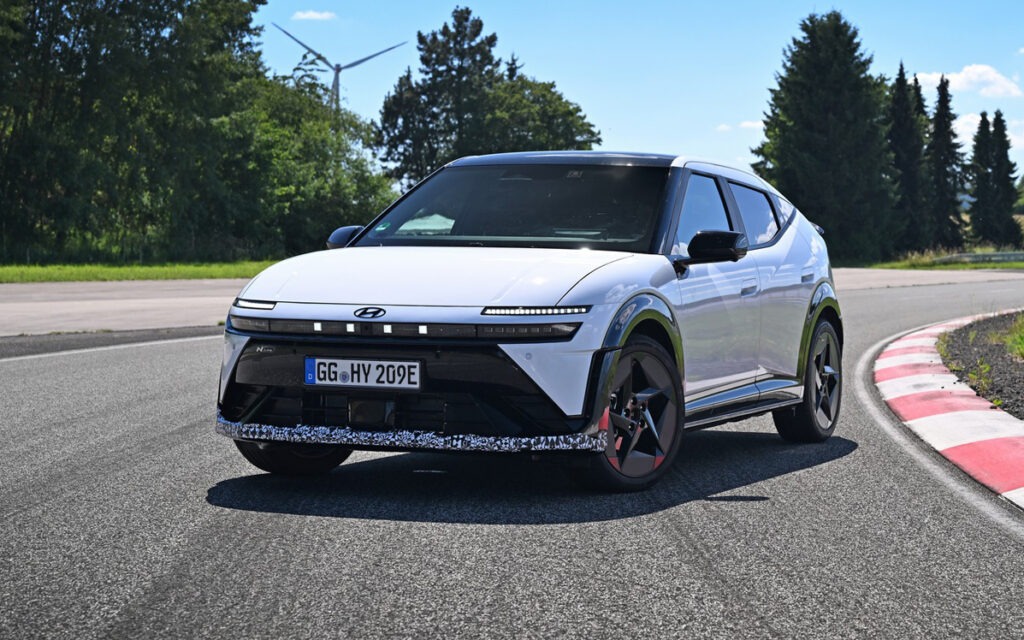
The lower body style brings another important advantage: it allows the Ioniq 3 to combine agile handling with a level of ride comfort that is noticeably superior to that of most SUVs. Our first drive confirmed exactly that. Hyundai’s latest small EV is genuinely enjoyable to drive, feeling composed and easy to place on the road even through corners. This is particularly true of the N Line version fitted with 19-inch wheels—the standard model rides on 16-inch rims, while 17- and 18-inch options are also available.
In the N Line, the steering delivers more detailed feedback, helping the driver build confidence. Body roll remains well controlled even in fast bends, while braking stands out for the seamless transition between regenerative and hydraulic braking. Regenerative braking strength can be adjusted using the steering wheel paddles, and the one-pedal driving mode is intuitive and effective in everyday use.
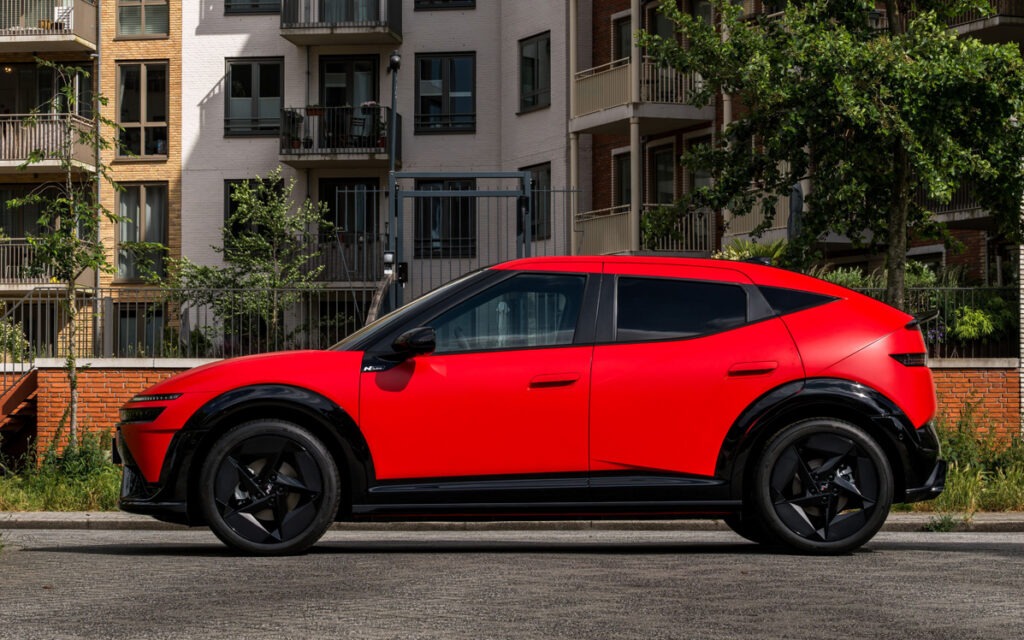
Interestingly, although the Long Range version has the lower power output and the slower official 0–100 km/h acceleration time, it responds more eagerly to an abrupt throttle input over the first few moments. The explanation lies in the battery chemistry: the NMC lithium-ion battery is capable of delivering high peak power more readily than the LFP pack fitted to the Standard model.
Based on these initial impressions, it is difficult to find fault with the Ioniq 3 from a usability standpoint. Pricing, however, is likely to be competitive only within the electric vehicle market, rather than in the broader small-car segment.