
More than just a new model, the second-generation iX3 is a true manifesto for BMW it marks the debut of the “Neue Klasse”, a fresh start for a brand aiming to establish a genuine benchmark in electric mobility. A case of overconfidence, or a promise fulfilled?
Stèphane Lémeret (AutoTrends.be / Belgium)
For the iX3, BMW’s engineers started from a clean sheet. An all-new chassis (housing two motors delivering 469 hp and 645 Nm), a brand-new platform designed to accommodate a generous 108.7 kWh battery, and a completely new electrical architecture paired with an unprecedented interface. Everything is managed by four “supercomputers”, the true brains behindthis first “software-defined” model from the brand — a car in which electronics and embedded computing sit at the verycore of its development.
Ascari-approved
From the very first moments, the iX3 impresses with its responsiveness, agility and composure through successive corners, quickly making you forget not onlyits size — a substantial 4.78 metres — but also its considerable weight of around 2.3 tonnes.
To demonstra tethis, BMW went as far as privatizing the Ascari circuit in southern Spain, allowing for fast laps, slalom exercises, emergency braking and avoid ance manoeuvres. And take it from us: very few electric SUVs on the market to day wouldbe able to keep up undersuch conditions. At no point do you have to fight the car.
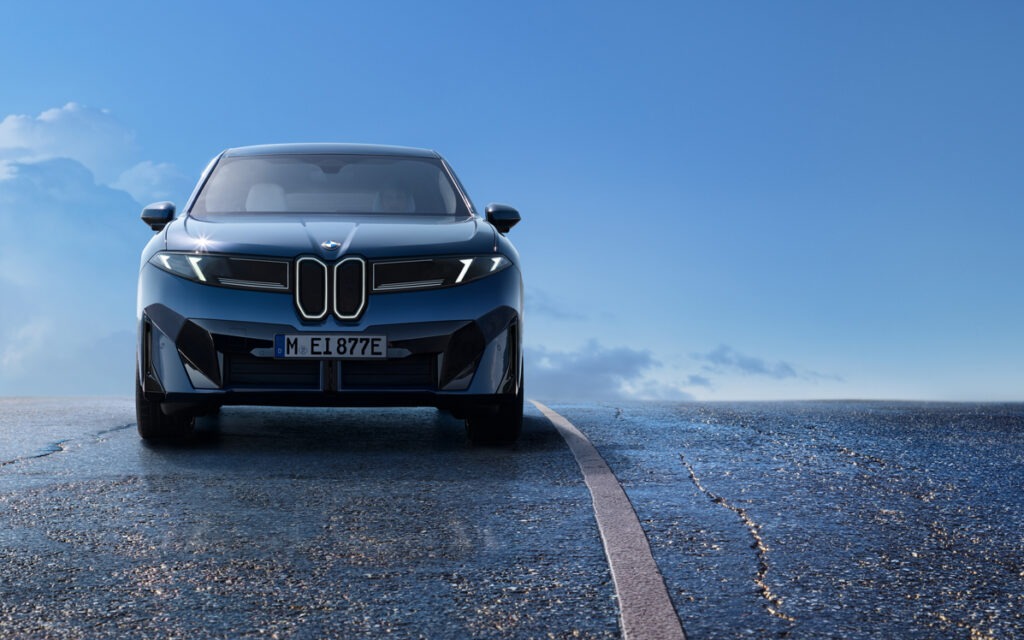
The steering places the front end with great precision into corners, the body remains remarkably flat, and the rear follows obediently, even helping to rotate the car slightly when physics inevitably come intoplay. All this without any sign of weakness or protest from the tyres, despite the heavy demands placed up on them. With such dynamicability, one could almost for get this is, first and foremost, a family SUV.
Panoramic display
On the road, the new Panoramic Vision cockpit stands out, with the Panoramic iDrive as its centre piece. This black strip at the base of the windscreen features, in addition to driving information, six customizable display zones. In practice, concerns about readability depending on sun light or the amount of information displayed prove unfounded. Essential data remains directly in the driver’s line of sight, notably via the 3D head-up display.
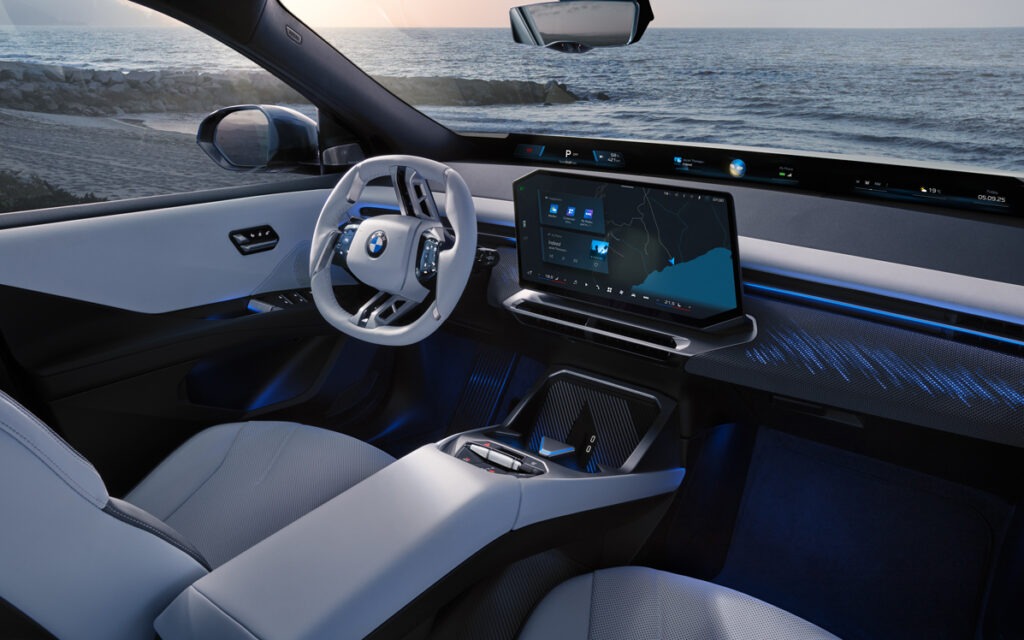
The central screen naturally controls all vehicle functions, yet we never found ourselves frustrated by the interface — a common issue nowadays — when trying to access what we needed. That alone says a lot about the attention paid to ergonomics.
A fully accomplished EV
Only one detail truly disappointed us: the absence of steering wheel paddles to adjust energy recuperation. This does not mean it cannot be adapted, but doing so requires multiple interactions with the screen, configuring each of the four driving modes (Sport, Efficient, Silent and Personal).
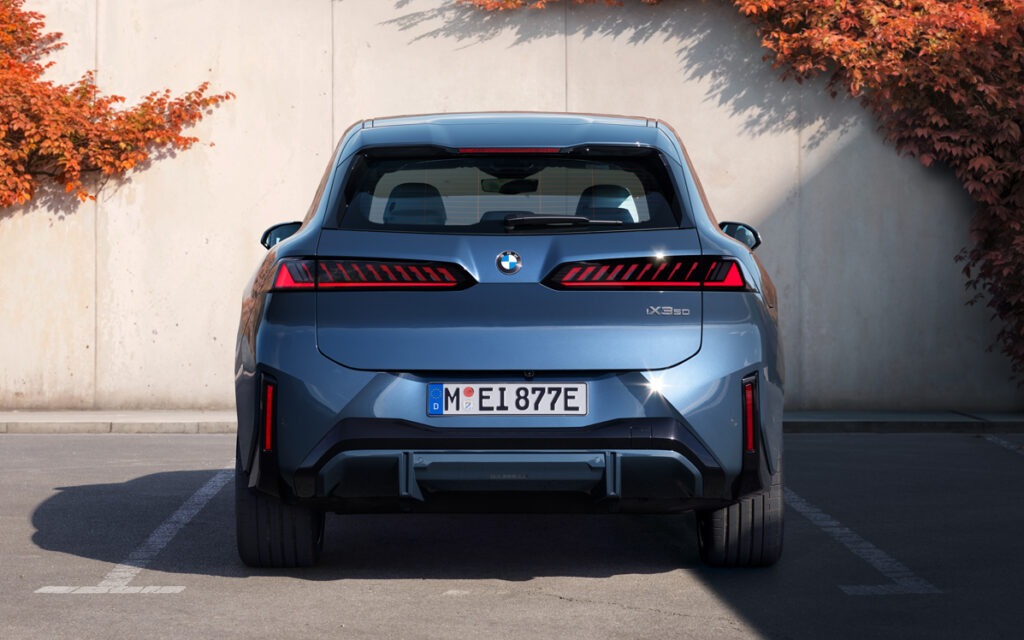
In return, BMW promises the smoothest braking ever offered — nothing less. Up to 95% of braking is handled by regeneration, leaving the mechanical brakes for emergency situations.
Last but not least: range. BMW claims between 679 and 805 km per charge. Naturally, this will depend on how enthusiastic you are behind the wheel, but our test car averaged 19.8 kWh/100 km over the 2,000 km it had covered — all in the hands of journalists who certainly didn’t hold back in enjoying the SUV’s performance.
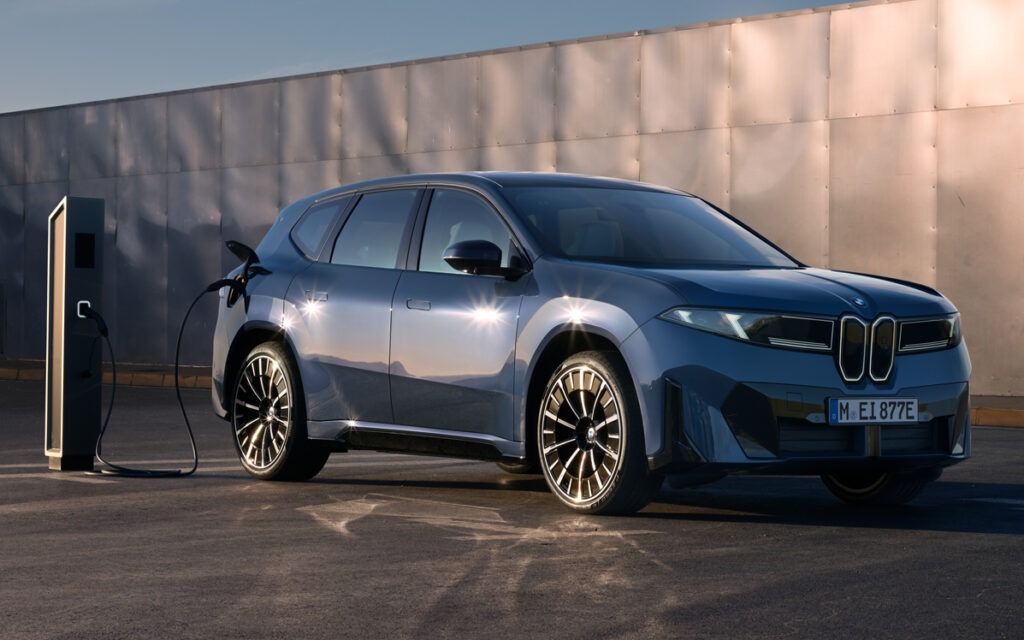
And don’t expect to leisurely sip your coffee during charging stops on long journeys: thanks to its 800V architecture, you can recover up to 372 km in just 10 minutes — provided you find a charger capable of delivering 400 kW.
All in all, this iX3 is an undeniable technological success, with a driving experience that fully lives up to BMW’s reputation.