
DS is revamping its most successful model with a new version in which the essence of luxury is its key selling point.
by Rafael Guitart (Highmotor / Spain)
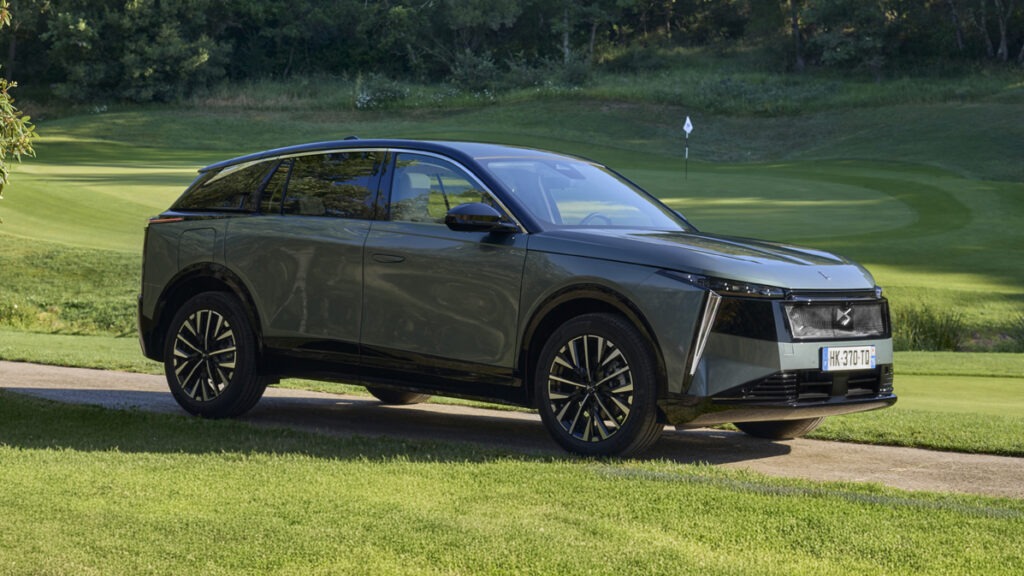
Measuring 4.66 metres in length, with a new design identity and a range that combines hybrid and electric versions offering a WLTP range of up to 740 kilometres, this French SUV represents a significant technological leap forward for the brand.
Whilst many manufacturers focus their strategy on sportiness, DS is taking a different approach. The Nº 7 is designed as a vehicle for travelling in the utmost comfort. It is already on sale, priced between 46.000 and 74.000 euros.
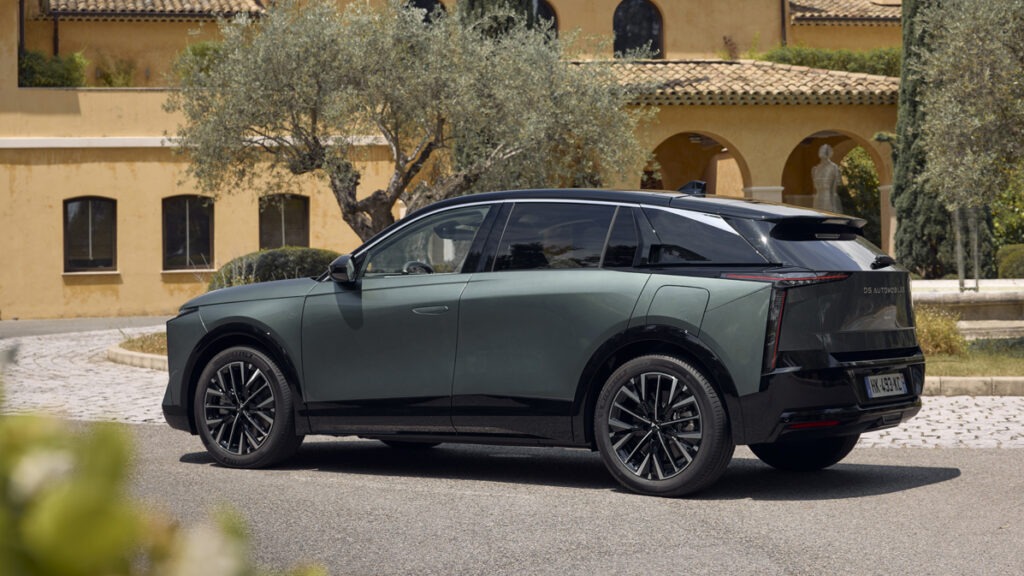
It is built on Stellantis’ STLA Medium platform, which allows for increased structural rigidity without compromising comfort, whilst the DS Active Scan suspension remains one of the brand’s most distinctive features. Thanks to a camera that continuously analyses the condition of the road surface, it adjusts the stiffness of each shock absorber before the vehicle reaches any uneven sections, reducing vibrations and improving stability.
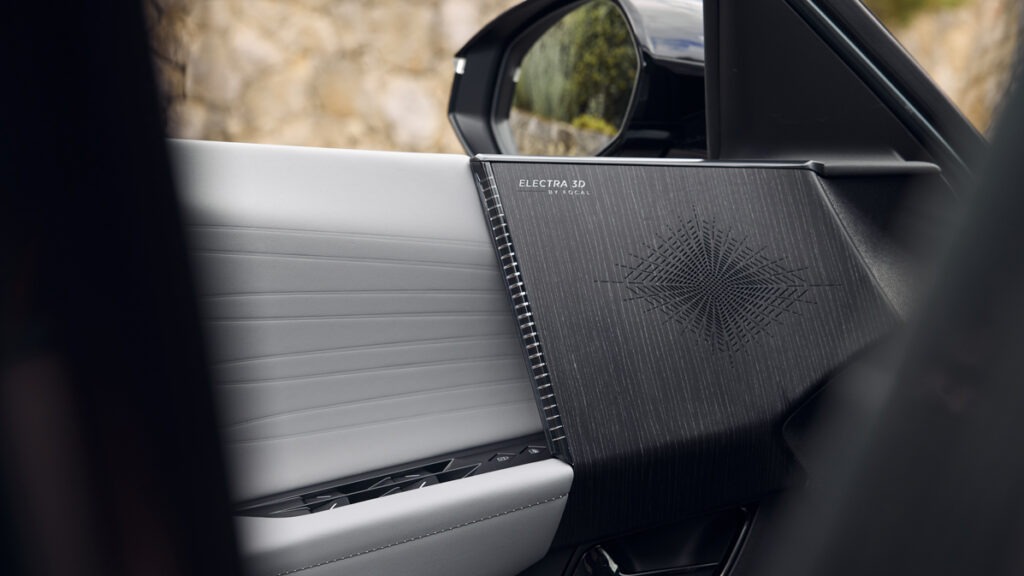
Added to this is significant soundproofing work using laminated glass and sound-absorbing materials, alongside a 690 W Focal sound system with 14 speakers that transforms the cabin into a concert hall.
Big space inside
One of the main characteristics of the DS N°7 is that it avoids looking like a copy of its competitors. The interior design retains elements characteristic of the French brand, such as the Clous de Paris engravings, pearl-stitching and upholstery inspired by high-end watch straps.
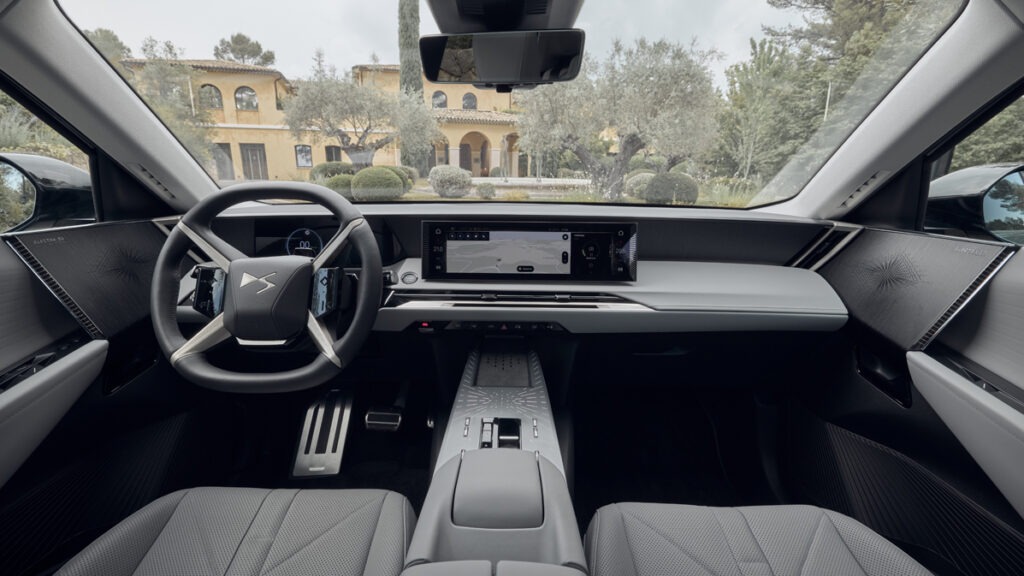
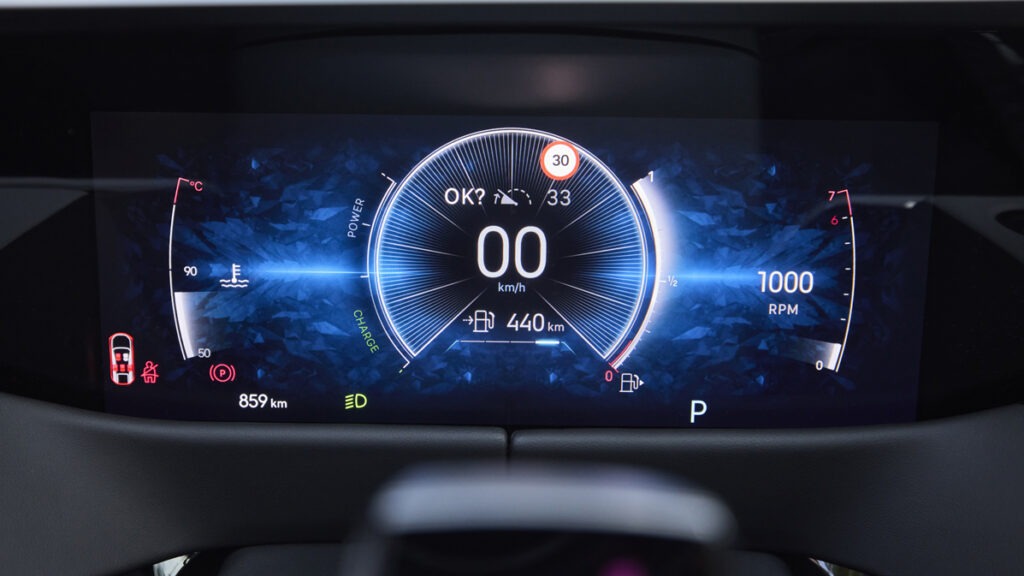
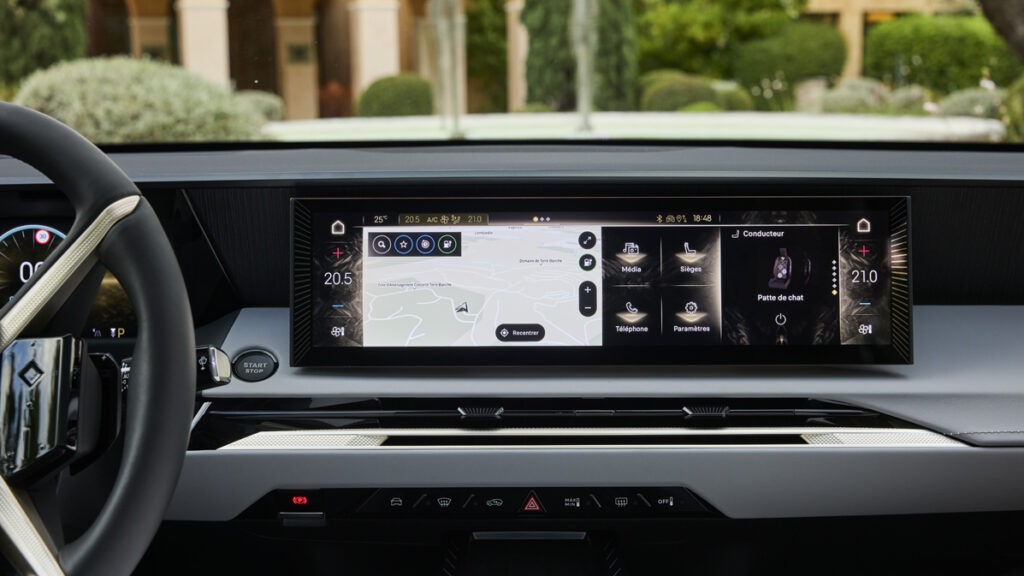
The 10-inch digital instrument cluster and the 16-inch central display are integrated into the dashboard, whilst the available materials include Alcantara, Nappa leather and natural wood trim, amongst others.
The front seats, in addition to heating, ventilation and massage functions, can be fitted with the DS Neck Warmer system, which directs warm air onto the neck and nape to enhance the sense of well-being without excessively raising the temperature inside the cabin.
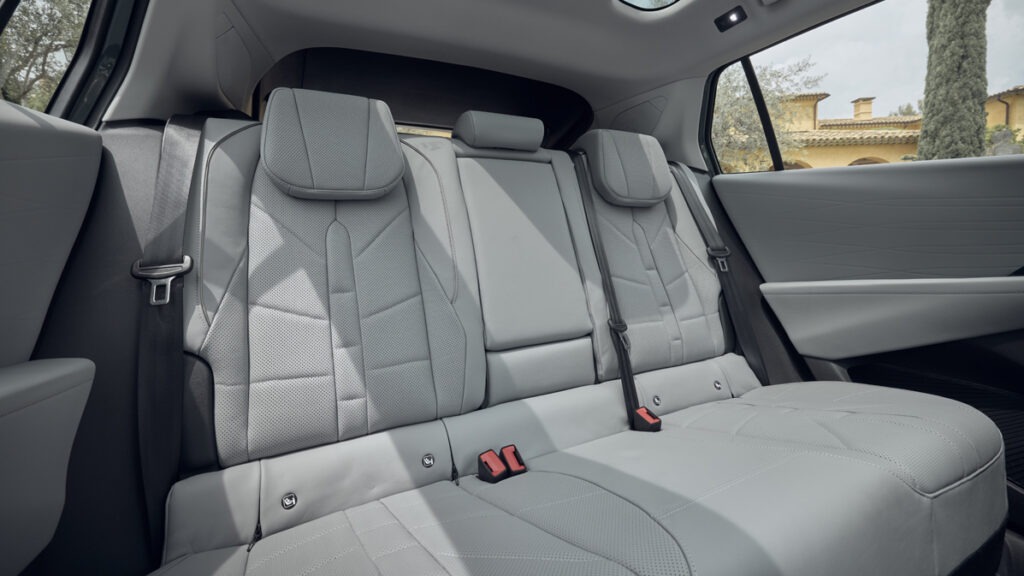
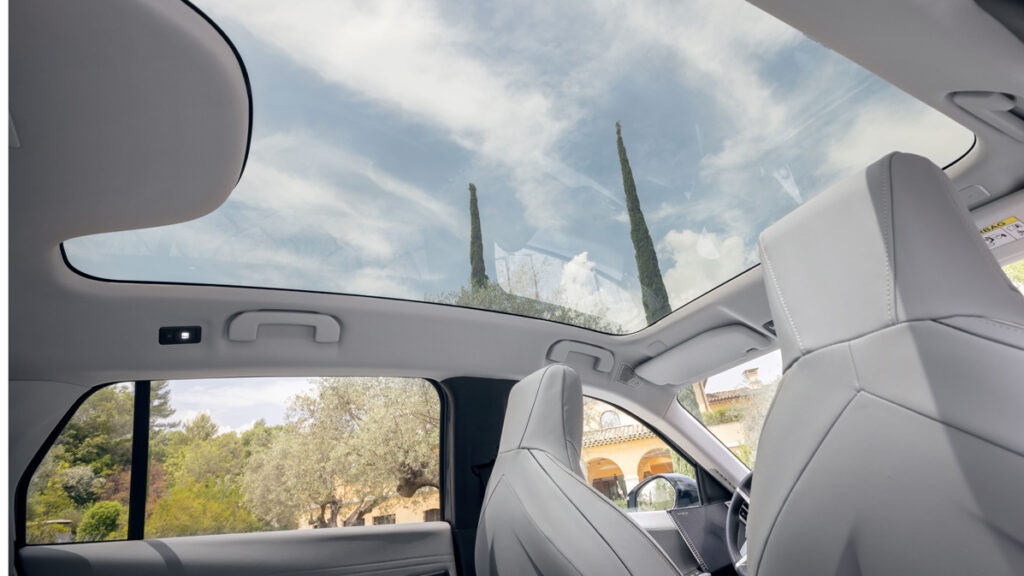
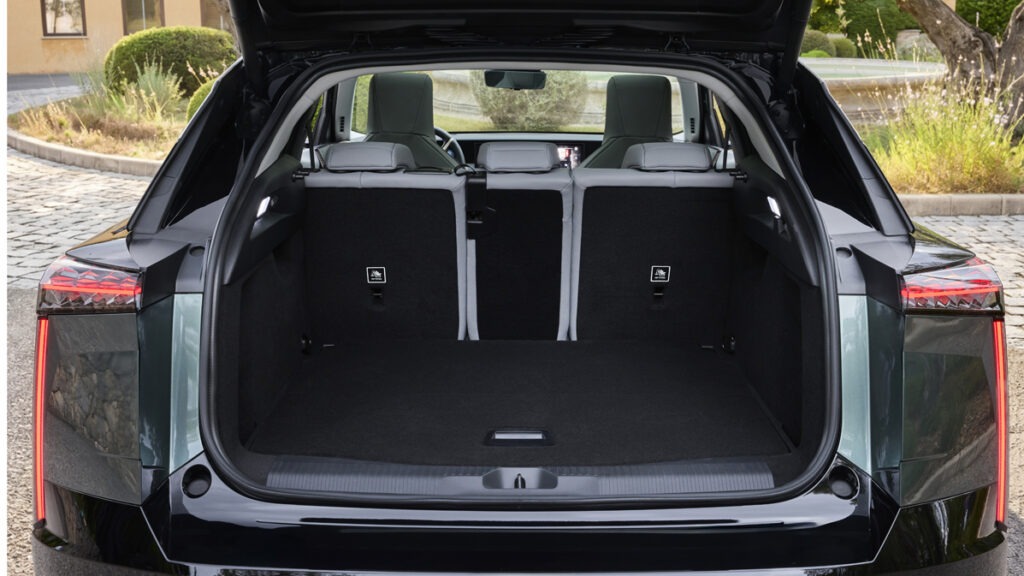
A great deal of attention has also been paid to rear passenger comfort, with longer doors and a panoramic roof that adds an extra 25 mm of headroom for passengers. The boot capacity reaches 560 litres at its maximum (500 litres in the all-wheel-drive variant with a large battery and a sound system featuring a subwoofer), a figure that is highly competitive even against SUV models in a higher segment.
Three electric options and one hybrid
The range consists of electrified versions, although there is no plug-in hybrid variant. The hybrid variants, with 145 CV of power, are available in four different trim levels, with prices ranging in Spain from 46.000 to 53.200 euros.
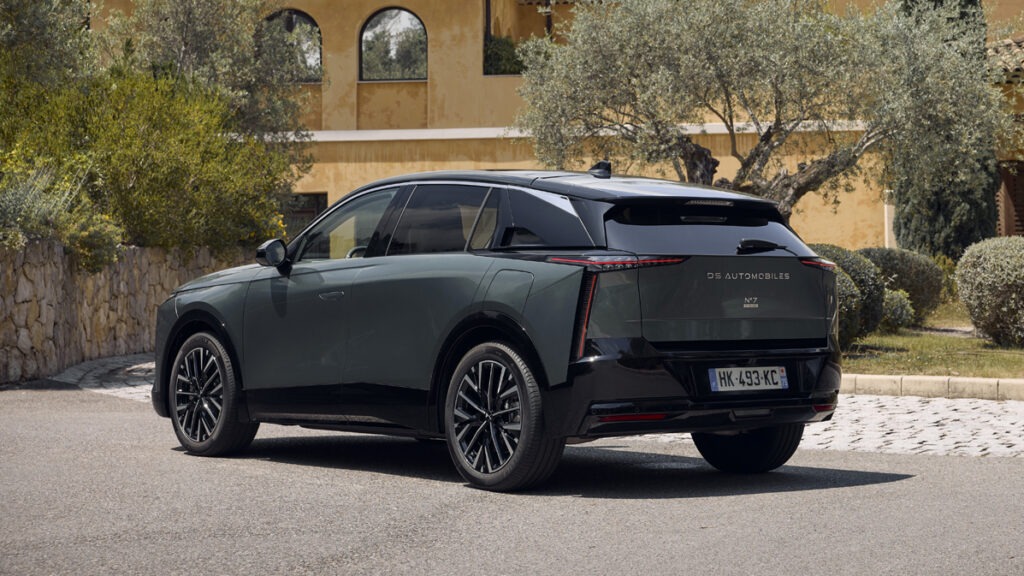
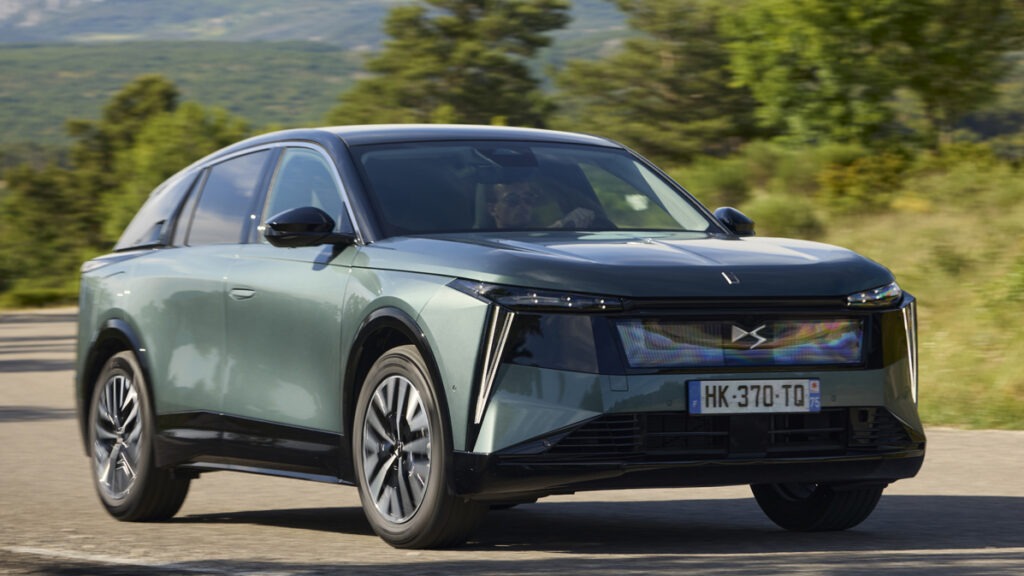
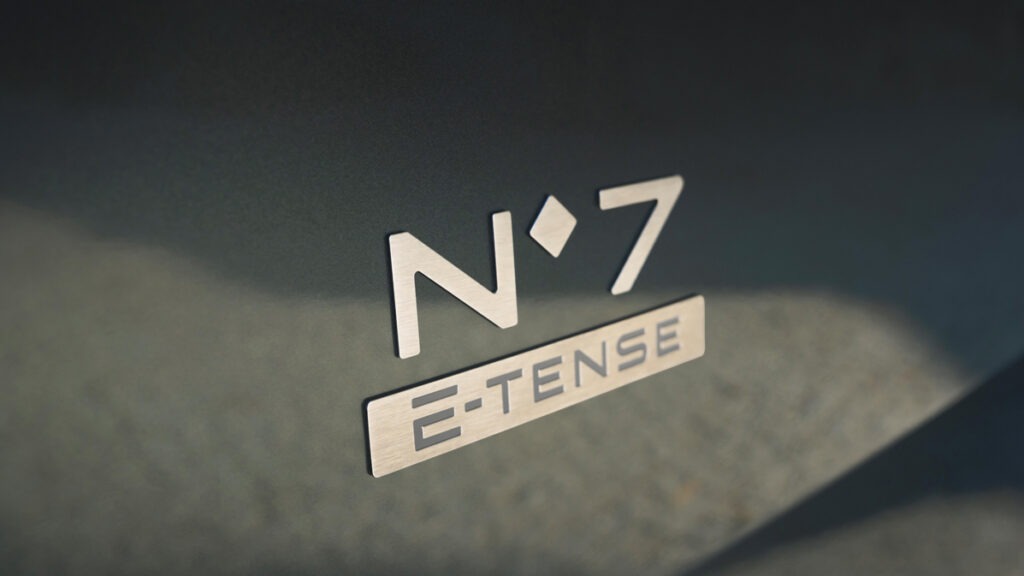
Meanwhile, the fully electric variants offer three power outputs – 230 CV, 245 CV and 350 CV – with two battery capacities: 73.7 kWh, and a higher capacity of 97.2 kWh of usable capacity. They are available with front-wheel or all-wheel drive: the 230 CV E-TENSE with a 73.7 kWh battery; the 245 CV E-TENSE Long Range with a 97.2 kWh battery; and the 350 CV E-TENSE AWD Long Range with all-wheel drive, also featuring the larger battery.
The trim levels comprise Standard, Pallas, Pallas Edition, Etoile and La Première, with prices ranging from 49.400 euros to 74.000 euros for the La Première AWD Long Range 350 CV version.
Range: one of its key selling points
The DS Nº7 aims to set the benchmark amongst premium electric SUVs, boasting a maximum range of 740 kilometres (WLTP), achieved by the front-wheel-drive version fitted with the 97.2 kWh battery.
The maximum AC charging power is 11 kW for both battery capacities, with 22 kW available as an option. DC charging is also improved in the version with the higher-capacity battery, which supports peak power of up to 160 kW, promising to charge from 20 per cent to 80 per cent in 27 minutes and provide approximately 200 kilometres of range in 10 minutes of charging.
It features a regenerative braking system operated by paddles, with three different levels of intervention, as well as a One Pedal function. Although a power output of 160 kW allows for competitive charging times, some latest-generation rivals already use 800-volt architectures with power outputs exceeding 250 kW, further reducing the number of stops during journeys.
Easy to drive
DS has concentrated virtually its entire technological arsenal on this model, incorporating all the latest safety devices and systems. Among the available systems, the following stand out: DS Drive Assist 2.0 with Level 2 semi-autonomous driving, and DS Night Vision with pedestrian and animal detection, DS PixelVision with adaptive lighting up to 520 metres, an extended Head-Up Display, an intelligent navigation system with automatic recharging planning and battery preconditioning, Plug & Charge or V2L function to power external devices from the vehicle’s battery.
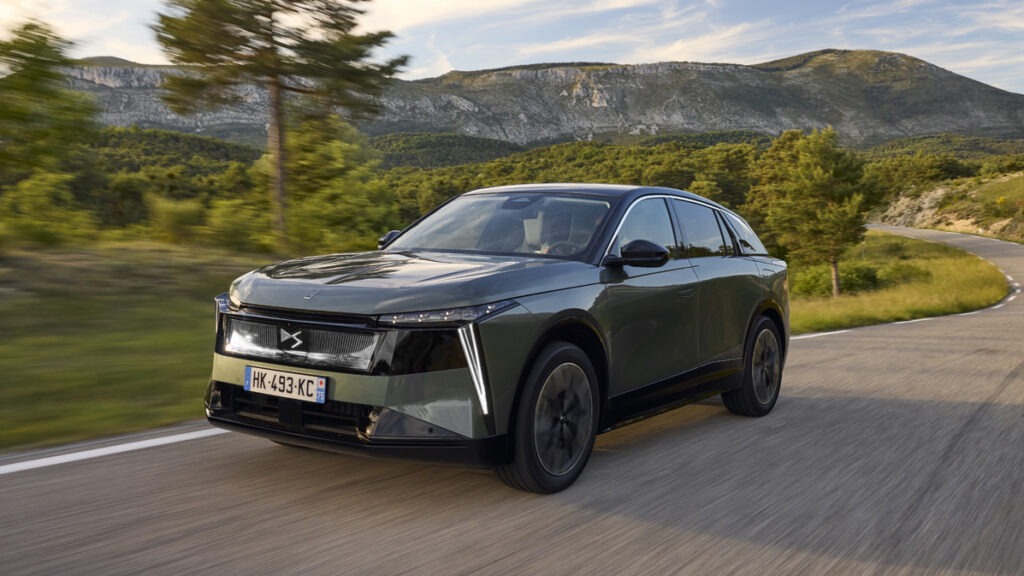
The 145 CV Hybrid version combines a three-cylinder petrol engine with a small 29 CV electric motor integrated into the six-speed dual-clutch automatic gearbox. Although it promises to run in electric mode up to 50 per cent of the time in urban driving and has a claimed fuel consumption of just 5.3 l/100 km, its power output falls well short of that offered by many equivalent premium SUVs, where hybrid versions ranging from 180 to 250 CV are commonplace.
The absence of a plug-in hybrid variant is striking. Whilst many manufacturers view this technology as a transitional solution, DS is committed solely to a self-charging hybrid and fully electric versions.
We were very impressed by the electric variant. Not only is it smoother, quieter and more refined, it also offers significantly more power, better acceleration and improved recovery, which translates into a more pleasant and safer driving experience, particularly on secondary roads and in town.
The suspension – which is very comfortable and excellent at absorbing bumps – the steering – which is smooth and precise – and the brakes – which are powerful and easy to modulate – all contribute to a great sense of safety and ease of driving.