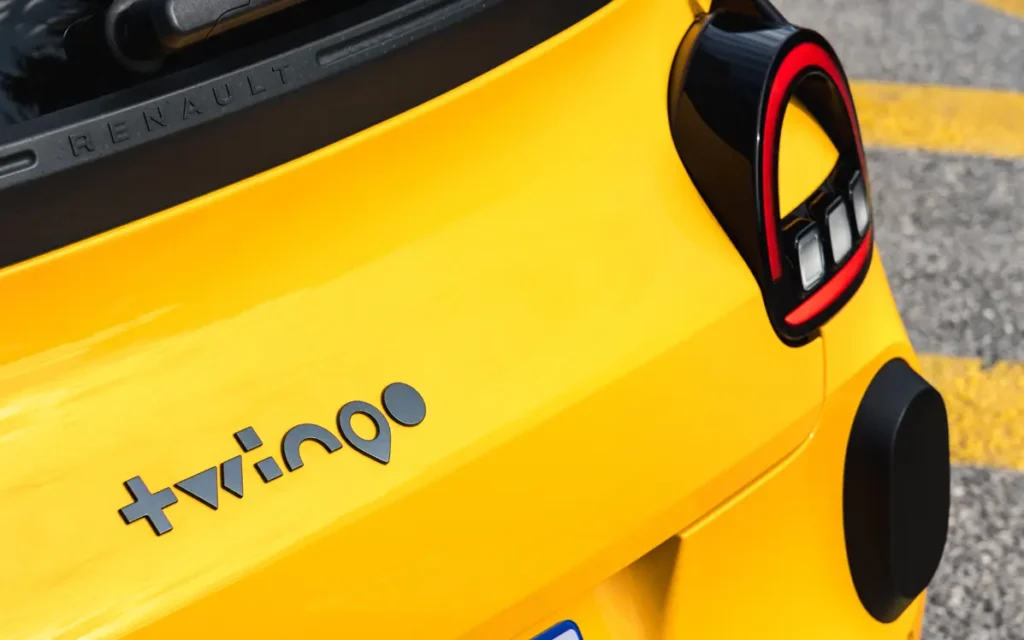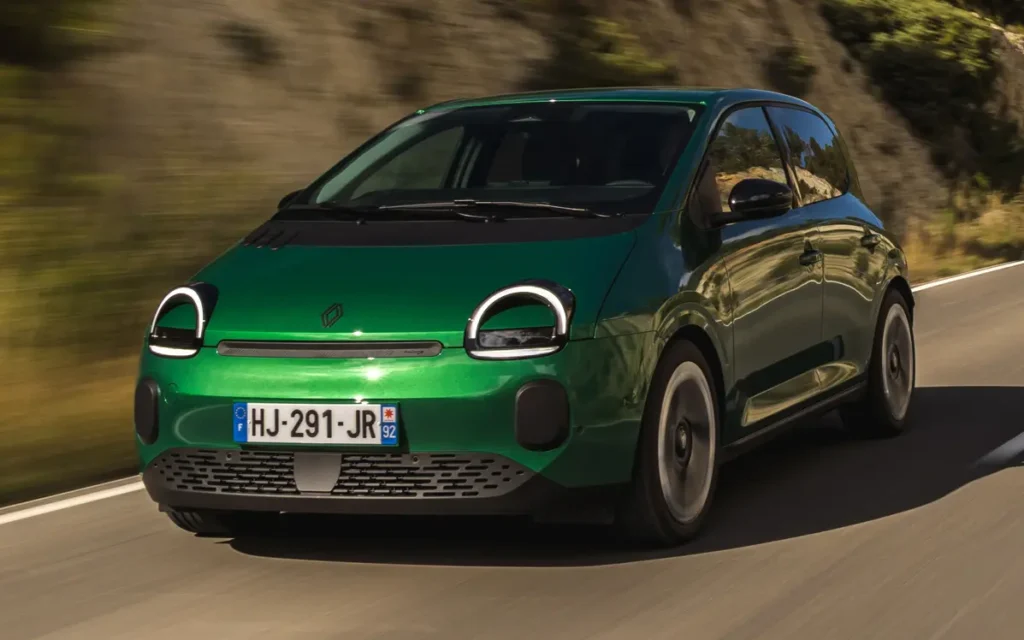
This new model, which brings the Twingo nameplate back after several years of absence, is a modern reinterpretation of the iconic first-generation Twingo from 1992.
By Joan Dalmau (Coches.net / Spain)
Renault has fulfilled its promise by introducing the new fully electric generation of the Renault Twingo with a starting price below 20.000 €.. While visually close to the original, it adapts to current market expectations with a five-door layout instead of the original three and a fully electric powertrain aimed primarily at urban driving. Compact in size and equipped with a 27.5 kWh battery, the car offers a WLTP range of 263 km—modest for highway journeys but more than sufficient for everyday city use. Renault offers it in two trims, Evolution and Techno, both equipped with essential features.
The original Twingo revolutionized the European A-segment thanks to its spacious minivan-like design, minimalistic interior, friendly appearance, and overall practicality. Although mechanically simple and not particularly efficient, it became highly successful.
Big competitors
However, its two successors failed to replicate its charm or status. Renault now aims to reconnect with that spirit by giving the fourth-generation Twingo a nostalgic yet modern aesthetic, aligned with the brand’s approach to its new electric lineup, particularly models like the Renault 4 E-Tech and Renault 5 E-Tech. (named The Car Of The Year 2025), As such, the new Twingo is conceived as a true spiritual successor to the beloved first generation.
Despite the common belief that the A-segment is disappearing in Europe—where only a few gas-powered models like the Fiat Panda, Hyundai i10, or Kia Picanto remain—small electric cars are making a comeback. Recent additions include the Dacia Spring, Leapmotor T03, Hyundai Inster, and BYD Dolphin Surf.
These vehicles are generally simple and low-cost, attempting to fill the void left by combustion models. Urban electric cars make sense in densely populated European cities, where short trips, low emissions, and efficiency are essential. Renault argues that the A-segment’s decline has been due to supply limitations rather than lack of demand, and believes that a small, affordable, attractive electric car can thrive today.
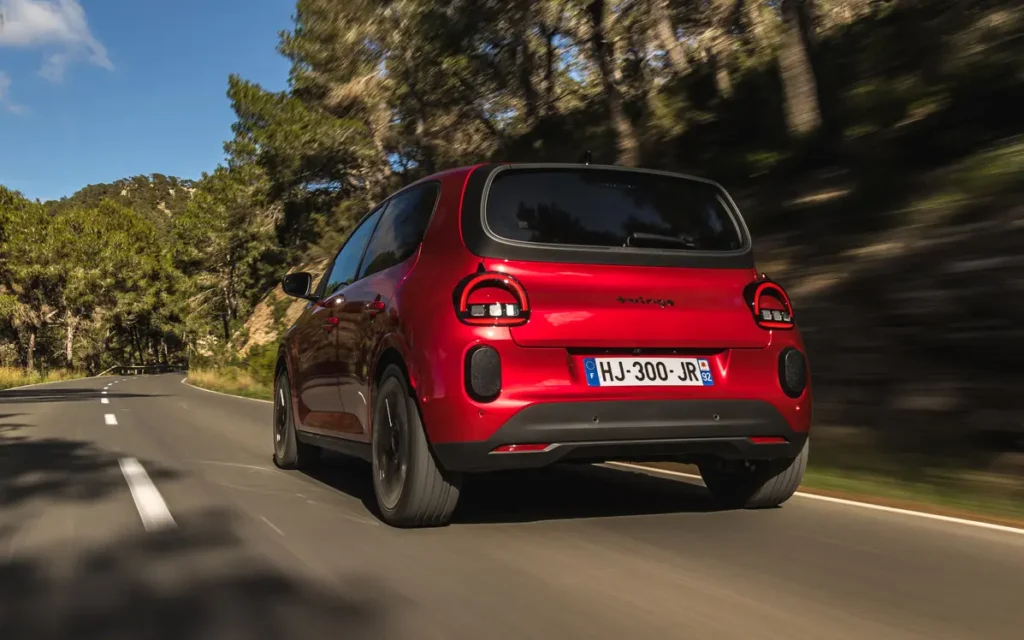
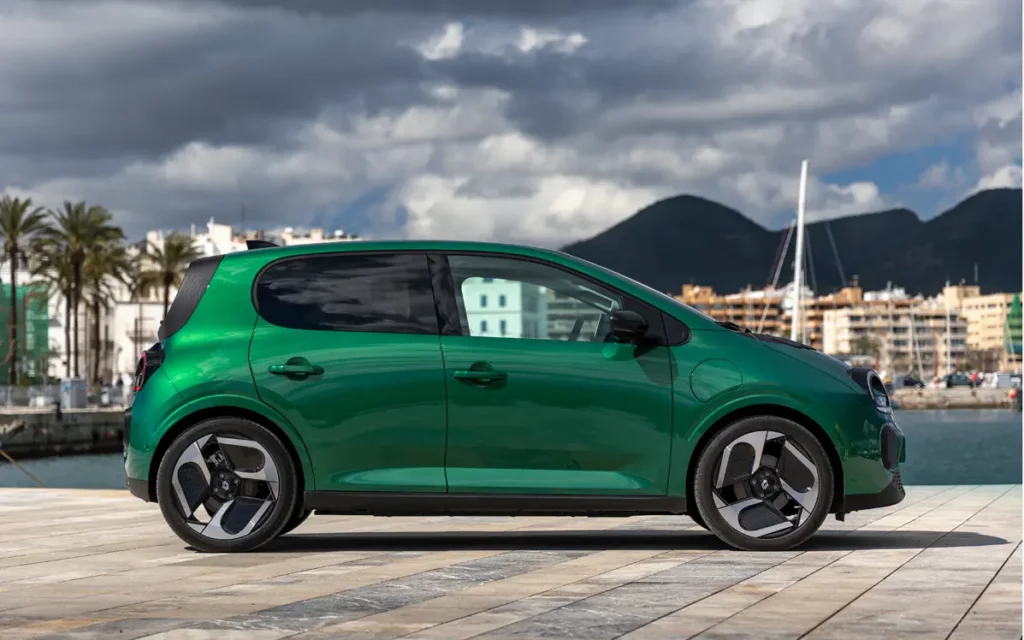
In terms of dimensions, the new Twingo is built on the same platform as the Renault 5. It measures 3.79 meters in length, with a 2.49-meter wheelbase, a width of 1.72 meters, and a height of 1.49 meters. Its wheels sit close to the corners of the chassis, with 16-inch rims as standard and optional 18-inch ones available.
Original style
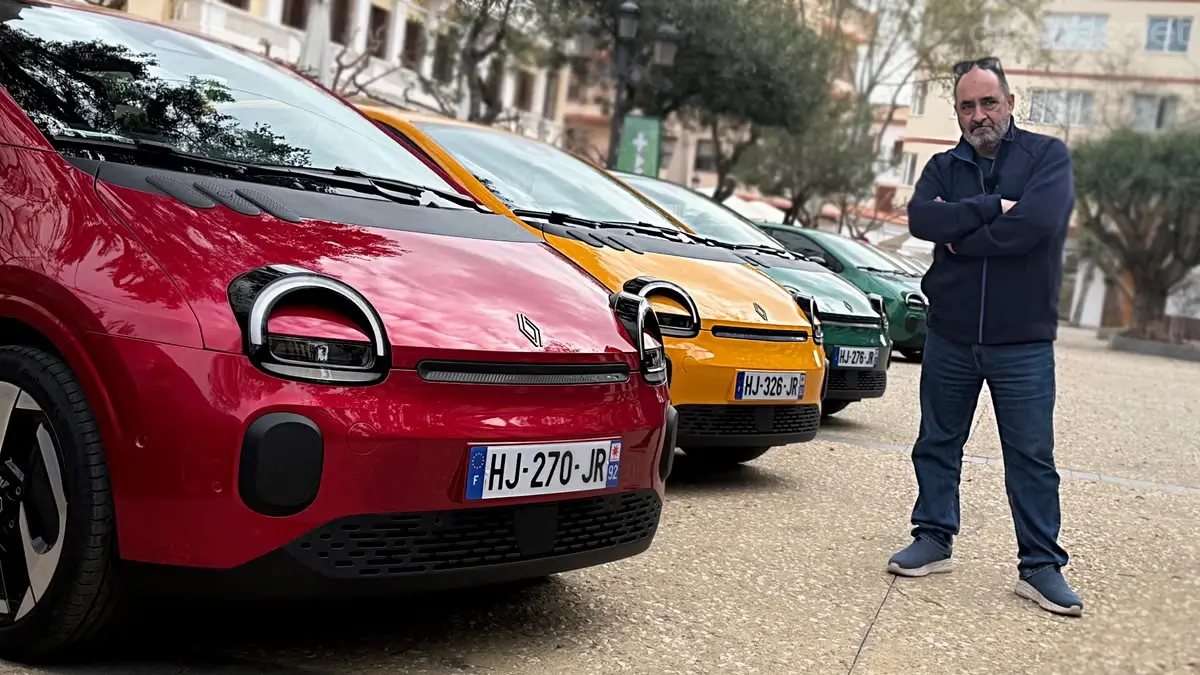
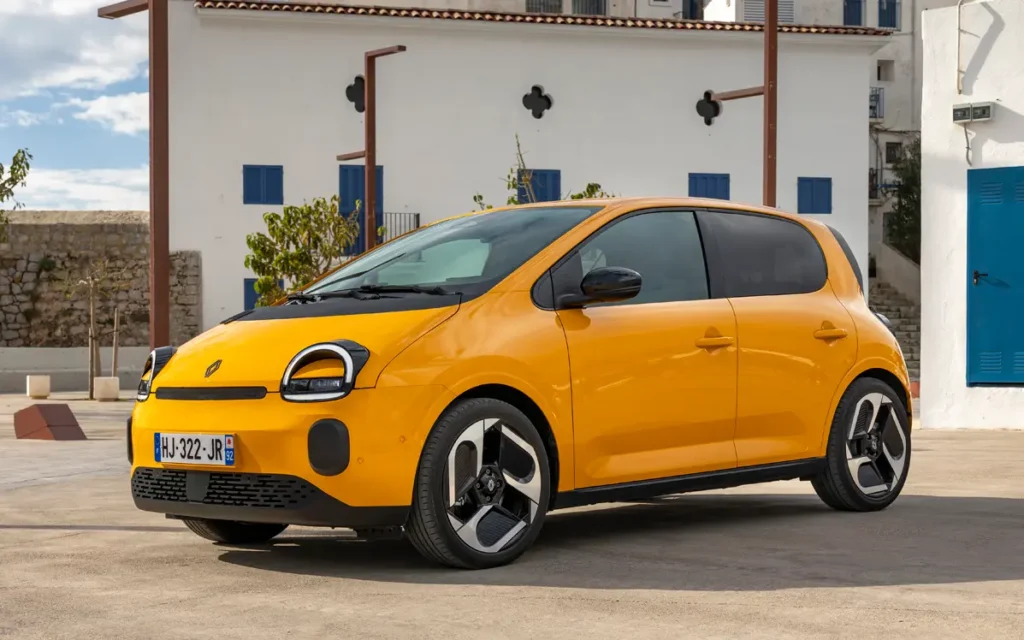
The overall design strongly echoes the original Twingo, including the characteristic “smiling” front grille and the trio of elements between the hood and windshield, which now conceal the washer-fluid cap since the hood itself does not open. The monovolume silhouette and upright rear end maintain the original’s spirit. The car will be offered in six exterior colors, including cheerful options like green and yellow, reinforcing its youthful image.
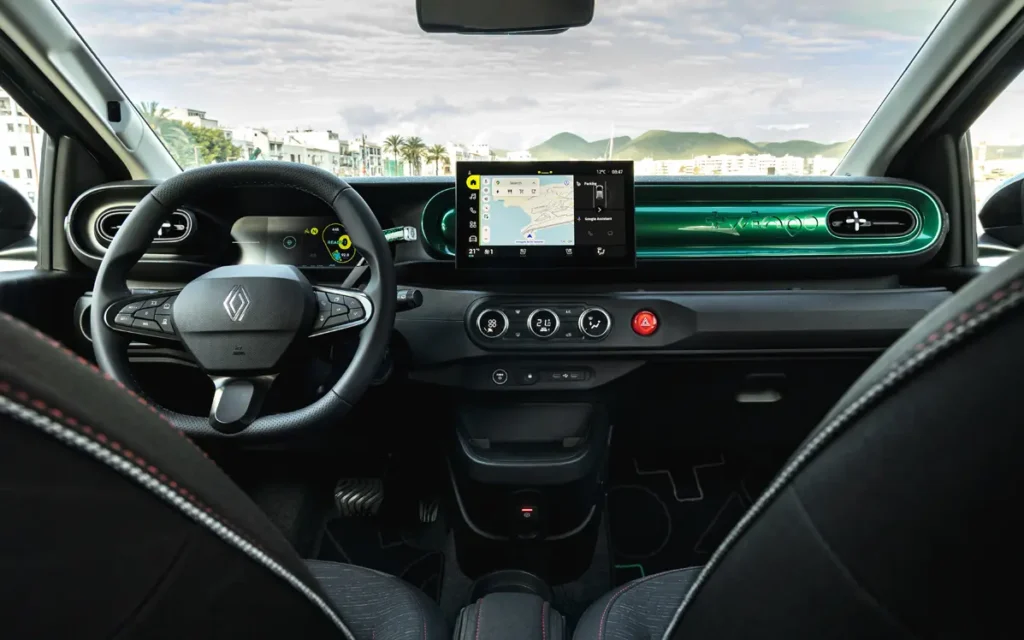
Inside, both trims share a common architecture featuring a seven-inch digital instrument cluster and a ten-inch central touchscreen; the latter includes the openR link system with integrated Google services exclusively in the Techno version. Interior materials and color accents differ slightly between trims, with the Techno variant featuring body-colored decorative strips. Practicality is well addressed, with 19 liters of storage across multiple compartments.
Rear passengers benefit from surprisingly generous space for such a small car, with two individual sliding seats that can fold and recline independently. The trunk capacity starts at 260 liters and expands to 360 liters with the seats pushed forward, exceeding 1,000 liters when they are fully folded. The Techno trim also offers a fold-flat front passenger seat for transporting long objects.
Mechanically, the Twingo is powered by an 82 hp electric motor, enabling quick acceleration in city conditions—0 to 50 km/h in 3.85 seconds—and a top speed of 130 km/h. Renault deliberately chose this power level to avoid increasing the vehicle’s cost through larger motors, batteries, and brakes.
The car uses a new LFP (lithium iron phosphate) battery sourced from CATL, which is 20% cheaper and optimized for durability and urban use. The total vehicle weight is 1,200 kg. Standard charging power is 6 kW, allowing a full charge in four hours, while an optional 11 kW charger (with 50 kW DC capability and vehicle-to-load functionality) is available.
Regenerative braking varies by trim: the Techno offers four levels, including a strong one-pedal mode ideal for city driving, while the Evolution has two modes.
Pricing starts in Spain at 19.500 € for the Evolution trim, which already includes the main screens, sliding rear seats, key safety systems, and rear parking sensors. The 21.100 € Techno trim adds Google integration, climate control, one-pedal driving, enhanced comfort features, and a rear-view camera.