
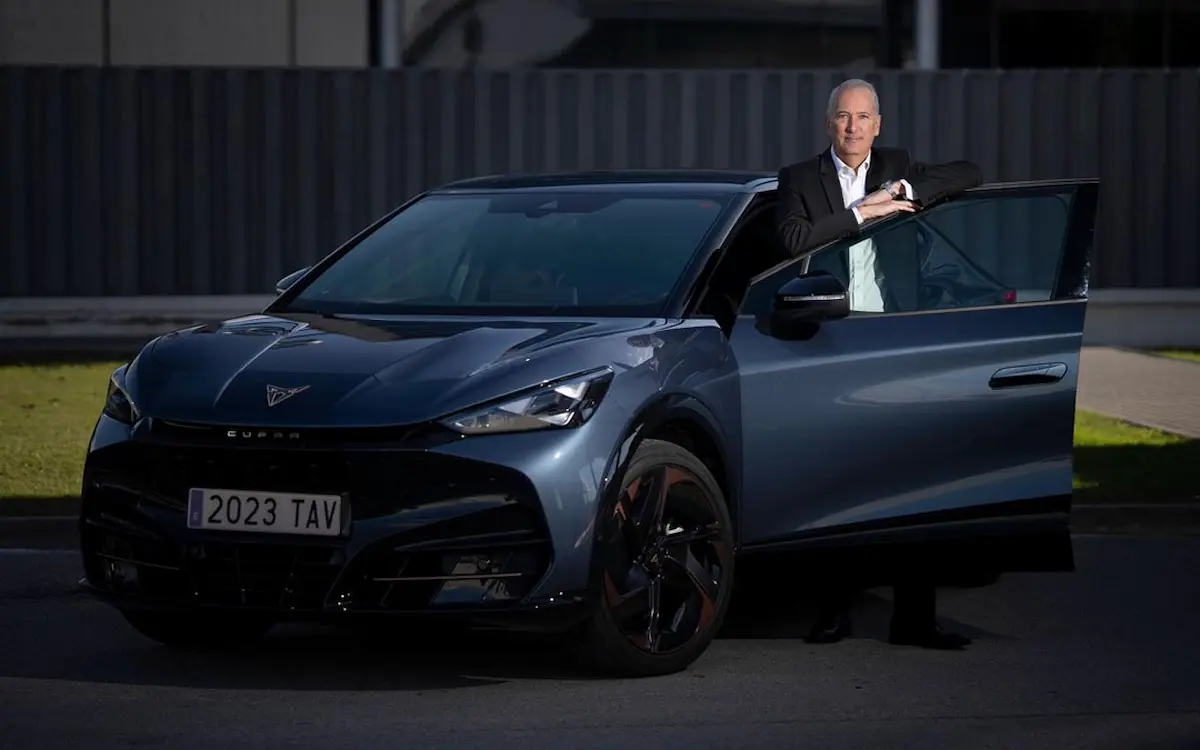
Markus Haupt is the 17th president in the history of Seat S.A., a company within the Volkswagen Group, that encompasses both the Seat and Cupra brands.
By Xavier Pérez (Prensa Ibérica / Spain)
Markus Haupt took the lead last year, and faces a mandate filled with crucial decisions and launches, aimed at securing a promising future for Seat within the complex automotive sector.Born in Brazil but of German nationality, he is a lover of spicy food, racing, and competition. He’s a big Real Madrid fan and, while he doesn’t have much time for the gym, he stays fit by “eating light.” This is Markus Haupt’s first official interview with the Spanish publishing group Prensa Ibérica.
In 2027, you are presenting the new Cupra Raval as your flagship model—a B-segment compact designed to conquer the European market. The Raval is based on the MEB+ Small platform, the same one used by the new Volkswagen ID.Polo, which will also be manufactured at the Seat plant in Martorell, near Barcelona. From an industrial perspective, how are you going to manage the period remaining until the 2035 ban on combustion engine sales?
Well, as you said, electrification is already a reality. The speed of implementation is set by the market because, ultimately, that affects how quickly customers accept electric cars. They dictate the pace. Between now and 2035, or beyond, the important thing for a car manufacturer—and this is our strategy—is to remain flexible. If the customer wants an electric car, we can sell them one; luckily, we have great electric models. If they prefer combustion because they live in a rural environment with fewer charging options, we can provide an answer for that too. I believe flexibility is the key in this transition phase toward a 100% electric world.
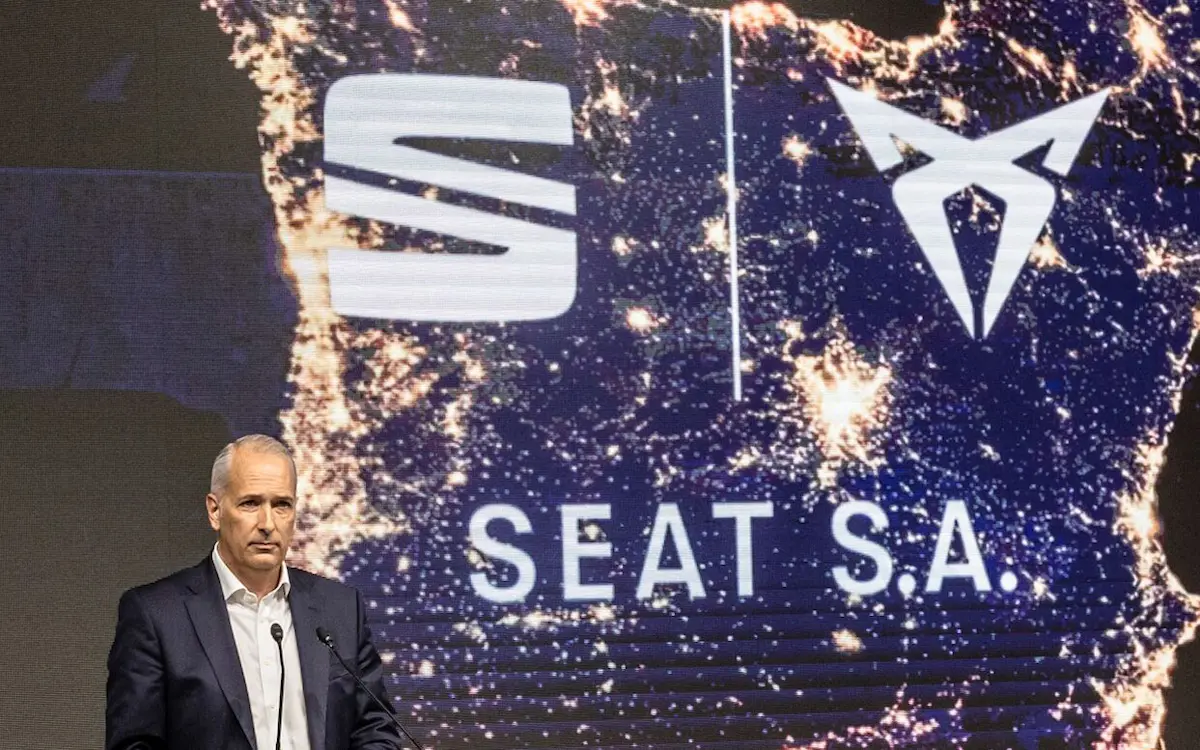
With the 2035 goal in mind, don’t you think Europe might have over-regulated the automotive sector?
Definitely. I’ve said it on more than one occasion. In the European Union, we tend to over-regulate things. For an industry like ours, which has long development and industrialization cycles, changing the rules in the middle of the game is not good. Imagine something like that in football. Adapting requires massive investments and long implementation periods. Therefore, we would greatly appreciate more direct communication where we support each other rather than putting up barriers along the way.
You are developing electric vehicles—where Seat will be a pioneer within the group for small cars—but simultaneously you have to maintain combustion development until it’s no longer allowed. How do you manage that dual development?
As I mentioned, the customers will set the pace. To stay flexible as a company, we are doing exactly what we described in our strategy. We are electrifying Martorell. Next year, in March, we will launch the Cupra Raval in Barcelona as part of the “Future Fast Forward” project. That is our specific response to the market situation. We will have the flexibility within Martorell to produce electric cars, plug-in hybrids, future hybrids, and combustion cars. This allows us to react to the different speeds of various markets while maintaining a secure industrial and commercial position.
You mentioned hybrids. That has been one of the Volkswagen Group’s shortcomings in recent years. Has it affected you significantly?
Looking at Seat and Cupra, our strategy has always been for the two brands to complement each other. We focused on electrification first with Cupra, but we’ve also electrified Seat. We started launching 100% electric cars with the Cupra brand. We think both brands work very well together. We are present in over 50 countries with very different markets—Mexico, Europe, Turkey. Each country and continent has a different reality. The idea is for the two brands to complement each other with that flexibility I mentioned. Right now, I think that gives us security as a company.
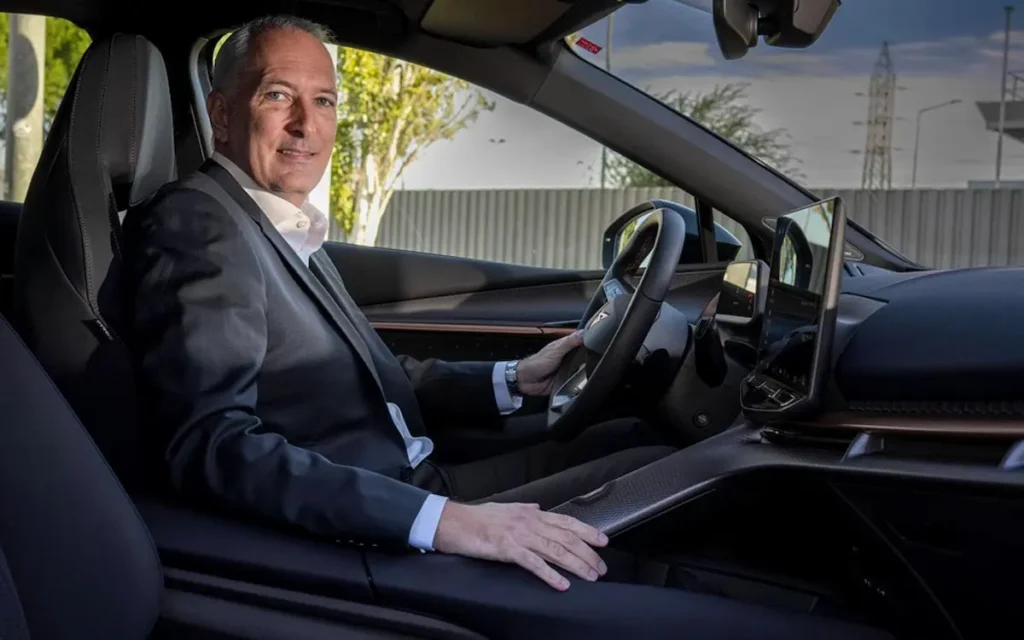
The future development we are discussing suggests that, contrary to the doomsayers who said Seat wouldn’t exist by 2028, the brand is here to stay. Does Seat have a long road ahead?
Yes. We have Seat for a good while, and we have Cupra for a good while, too. They are two brands that complement each other perfectly. It’s been seven years since we launched Cupra, and we’ve released seven models—that requires a lot of investment and effort from the company. We are also betting on Seat by launching the Ibiza and the Arona. In the medium term, we will launch mild-hybrid versions of those two models, and we are also going to launch 100% hybrid versions for the Leon. The commitment to both brands is clear; they remain the core of our future strategy.
You’ve redesigned the Ibiza and Arona, you’re working on the Leon and the Raval… what’s the next step?
We are 100% focused on the launch of the Raval. If I tell you the next step now, you won’t want to interview me anymore! So, let’s keep something in the trunk for later.
The Tindaya was quite well received in Munich…
Yes, we presented the Tindaya in Munich and we are thrilled with the feedback. The metrics we use were very high. We had two clear intentions: first, to show what the future design of this brand could be, and second, as I said in Munich, we want this car to become a reality.
And dreaming about the Dark Rebel is another story entirely…
Well, we don’t have concrete plans for the Dark Rebel yet. We would love to, of course, and we will continue to explore future possibilities for what we can do with it.
Back to the present: the Cupra Raval arrives next year. What does this model represent for Seat?
It will be a benchmark for the company. Not just for what Cupra represents to Seat, but for the rest of the Group as well.
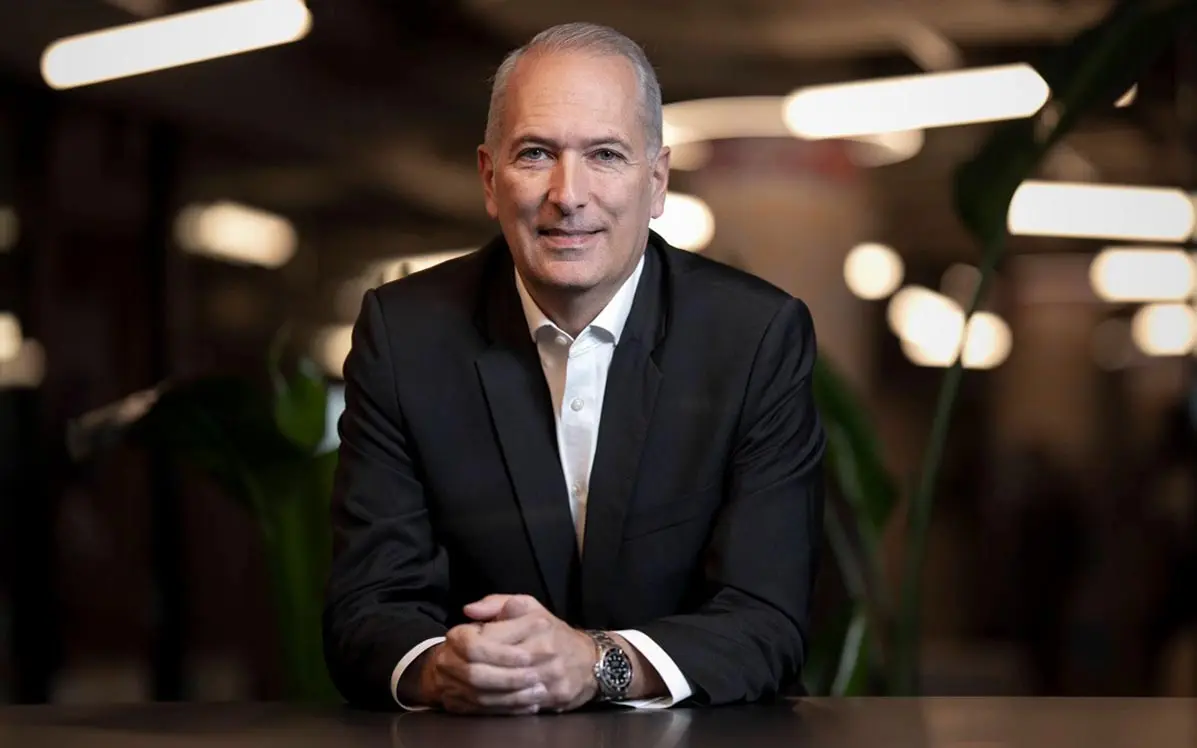
You have been the architect of the electrification of Martorell for the arrival of the Raval. Is everything ready?
We are very far along. The launch of the Cupra Raval is scheduled for March 2026. This model is the backbone of our strategy because we are manufacturing it at home, and also because we are entering a new segment for electric cars: the urban segment. The car is 4 meters long and perfectly demonstrates the character and DNA of Cupra. It’s rebellious, emotional, and perfect for the urban environment, but it offers so much more when you sit inside. You get the feeling you’re in a higher-end car. The driving experience is spectacular—I’ve had the privilege of driving it several times already. With a chassis lowered by 15mm, incredibly direct and sporty steering, and a front-axle differential, it feels like a go-kart. This car is key to our immediate future. Furthermore, this type of vehicle opens the door for development across the entire Group.
That must be incredibly important for the brand…
Yes, because on one hand, it allows several of the group’s brands to have massive product synergies. We have a common platform for the four products that will be manufactured in Spain, specifically on the Iberian Peninsula. Two of them here in Martorell and two at the Volkswagen plant in Navarra. These synergies allow us to save costs, but they also allow us to have cars in the same segment where every single one is very different. When you have the chance to see and drive them, I hope you’ll confirm something we are already convinced of.
But making an electric car will lead many people to wonder: if we are making a Raval, why aren’t we making an electric SEAT?
We have a very clear strategy for SEAT. Right now, it’s not profitable. We just presented the updated SEAT Ibiza and SEAT Arona in Ibiza. These are cars that continue to perform very well. In recent years, we’ve seen that the brand’s volumes remain very stable, complementing Cupra. And that’s a good thing. For now, we have concentrated on the Cupra Raval as the first car in the group’s family of urban electric vehicles. It is the first launch of a family of four vehicles. At SEAT, we are especially proud to lead this project for the group, investing more than 10 billion euros in the Iberian Peninsula.
Could 2026 be one of Cupra’s best years with the arrival of the Raval?
We are extremely excited. Since its birth, Cupra has grown tremendously. This year, we’ve already delivered over 245,000 cars as of September. Of those, we’ve increased the share of 100% electric vehicles by 84% compared to 2024, and plug-in hybrids by 78%, so we are moving very fast. This year, we produced the 1,000,000th Cupra, which we recently raffled off among our company’s staff. Next year has to be the next step, and we hope so—that next year we continue breaking records with our brands.
Do you consider it something very special to lead a company where you have contributed to developing electrification?
It’s a success for the entire team. We are very proud to lead this transformation, which goes far beyond the transformation of our company. Ultimately, it’s a transformation that is part of the country’s own transformation. It is the largest industrial investment in the history of Spain. Being at the helm of this company, together with my team, leading this project… the truth is that it makes us proud to be part of it, and it also confirms the confidence that the Volkswagen Group has in SEAT.
Will that trust from the group lead to them giving you another platform down the road?
For now, we are totally focused on launching the Raval. It’s a project of massive magnitude. In the Martorell factory alone, we are investing more than 3.3 billion euros, including the battery assembly plant. A project of this scale requires a lot of attention, but of course, we keep looking toward the future. In these changing times I mentioned, the moment for Martorell to have a second electric platform will surely come, but right now we are focused on launching the Raval and defining these coming years of transition where flexibility—which for me is very important—is the key to success.
Is the Martorell plant where you want it to be right now?
It will be soon, once we launch the Cupra Raval and the Volkswagen ID.Polo. Naturally, we have to keep working on being more efficient and more productive. Within the group, our factory is a benchmark in terms of productivity, how we do things, our flexibility, and how we face challenges or crises—like the semiconductor shortage or the pandemic. But as CEO of the company, I can never be fully satisfied; I always have to ask more of my team. Therefore, in an environment of increasing competition, we must also continue to increase our competitiveness.
Let’s change subjects. Do you think the arrival of Chinese brands in Europe has been handled well?
I think tariffs have been a way of trying to control it, but erroneously. At SEAT and Cupra, we are convinced that tariffs are not the solution. We always advocate for free trade, and that is truly the direction we would like to work in. We are working on finding a solution to the burden of tariffs, but personally, I would welcome other types of initiatives much more.
They are arriving, and they are doing so in mass. Does it worry you?
The entry of Chinese manufacturers is a reality, and it’s something we aren’t going to stop—nor do we want to stop it. Competition, as long as it’s fair competition, is healthy for companies. I always demand more from the team. To use a sports analogy: if I’m running the 100 meters and I see someone gaining on me from the right and another from the left, I have to think about what to do so they don’t catch me—change my diet, train harder—and we see the same in the automotive industry. This entry is an opportunity that carries risks. There are things we will struggle to compete with, like price wars, but we have many other strengths they don’t have yet: a very wide dealer network, excellent after-sales service, and—speaking for the brands within our group—a lot of heritage, history, and a brand image that they still have to create. In the end, we have to lean on our strengths and not be afraid of the competition.
What should European brands do?
Focus on their values. And perhaps regularize—since we often talk about regularizing or regulating. Let’s regulate the entry. I’m more in favor of inviting them to come but with clear rules—creating joint ventures, for example, just as China did with us and the entire European auto industry thirty or forty years ago. That would be a much fairer form of competition because, ultimately, if they came to produce in Europe, they would have European manufacturing costs. Furthermore, we should tell them: “Okay, come, but also make sure you have 50% local content.” That creates jobs, attracts investment, and creates a head-to-head competition.
https://www.elperiodico.com/es/economia/20251114/markus-haupt-seat-futuro-para-rato-123592608